
Cycle syncing — we hear it everywhere lately, but what is it really? Where do you even start, and does it actually work?
Well, cycle syncing, simply put, means aligning your lifestyle with the natural rhythms of your menstrual cycle. By understanding how hormone fluctuations affect everything from energy levels to mood and metabolism, you can make smarter choices about how you eat, move, work, and rest.
This blog explains the basics of cycle syncing and why it’s gaining popularity fast. We’ll look at each phase of your menstrual cycle, how key hormones like estrogen and progesterone impact your body and brain, and how you can adjust your routines accordingly. Whether you’re hoping to reduce PMS, improve workouts, balance hormones, clear up your skin, or just feel more connected to your body — cycle syncing can offer real, sustainable support.
What Is Cycle Syncing?
Cycle syncing has blown up in popularity recently, especially on TikTok and Instagram. Everyone’s talking about it — but let’s break it down with some actual facts.
Cycle syncing means adjusting your habits — like workouts, meals, and even productivity — to match the four hormonal phases of your menstrual cycle.
While men operate on a 24-hour hormonal cycle (testosterone peaks in the morning and drops by night), women’s hormones follow a roughly 28-day cycle shaped by four key players:
- Estrogen: Builds the uterine lining, boosts mood, energy, and motivation.
- Progesterone: Calms the body, supports sleep, and prepares for pregnancy.
- Luteinizing Hormone (LH): Triggers ovulation mid-cycle.
- Follicle-Stimulating Hormone (FSH): Stimulates follicle growth in the ovaries.
- Testosterone: Rises slightly during ovulation, increasing libido, confidence, and muscle-building capacity.
- Cortisol: The stress hormone. Women tend to be more sensitive to cortisol, especially in the luteal and menstrual phases.
- DHEA (Dehydroepiandrosterone): DHEA is a foundational hormone that helps produce both estrogen and testosterone, playing a key role in supporting mood, vitality, and libido.
- Insulin: Regulates blood sugar. Sensitivity fluctuates across the cycle, decreasing during the luteal phase.
These hormones don’t just affect your reproductive system — they influence brain chemistry, digestion, skin health, and how well you recover from stress.
Not everyone has a textbook cycle, of course. A normal cycle can range from 21 to 35 days. For the sake of this example, we’ll use a 28-day cycle — but to really sync effectively, it’s key to track your personal cycle so you know where you are.
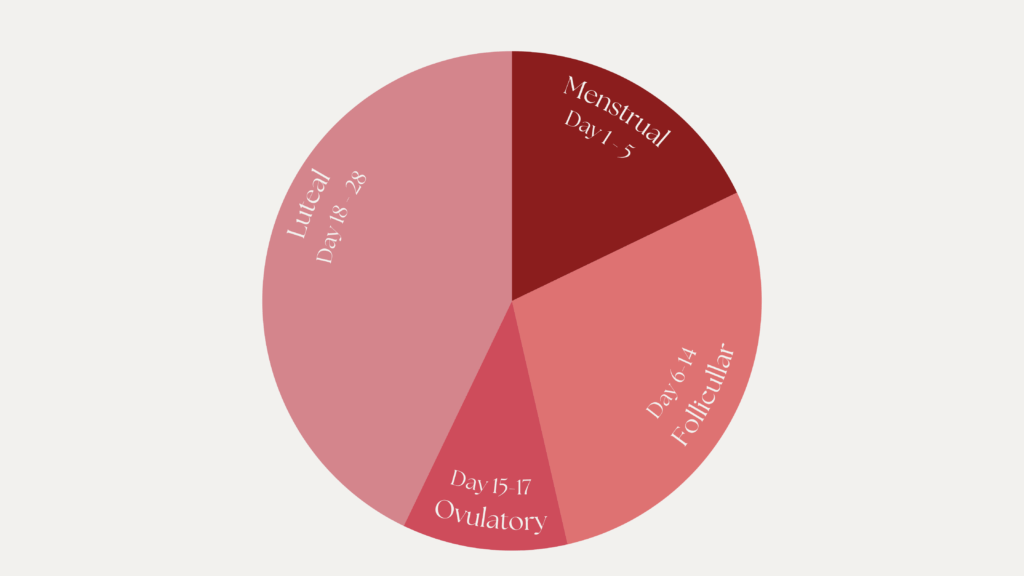
The four phases of the menstrual cycle are:
- Menstrual Phase (Days 1–5)
- Follicular Phase (Days 6–13)
- Ovulatory Phase (Days 14–16)
- Luteal Phase (Days 17–28)
Let’s explore what happens in each phase — and how you can live better by flowing with your hormones instead of against them.
The Four Phases of the Cycle & How to Sync
Phase 1: Menstrual Phase (Days 1–5)
Hormonal Profile: Estrogen and progesterone levels are at their lowest. This phase begins on the first day of your period and typically lasts 3–7 days.
How you might feel:
- Fatigue
- Lower body temperature
- Cramping or bloating
- Increased emotional sensitivity
What to focus on:
- Gentle movement like walking or yoga
- Journaling or reflection
- Prioritize sleep and alone time
Eat this:
- Iron-rich foods (spinach, lentils, grass-fed meat)
- Herbal teas and plenty of fluids
- Warm, comforting foods like soups and stews
Why It Matters: Your body is using energy to cleanse and reset. This is the time to slow down, turn inward, and recharge.
Phase 2: Follicular Phase (Days 6–13)
Hormonal Profile: Estrogen and FSH begin to rise as the body prepares to release an egg. This is the rebuilding phase.
How you might feel:
- Increased energy and motivation
- Clearer skin (does your acne become worse during this period? Read this article)
- Heightened creativity and curiosity
- Improved endurance and pain tolerance
What to focus on:
- Brainstorming and social activities
- Launch new projects or set intentions
- High-intensity workouts or strength training
Eat this:
- Fresh, light meals (salads, lean protein)
- Fermented foods to support estrogen metabolism
- Antioxidants like berries and leafy greens
Why It Matters: This is your most “go-getter” phase. Rising estrogen boosts brain function, mood, and metabolism — perfect for productivity and play.
Phase 3: Ovulatory Phase (Days 14–16)
Hormonal Profile: Estrogen and LH peak, triggering ovulation. Testosterone also bumps up slightly.
How you might feel:
- High energy and libido
- Increased verbal fluency and confidence
- Energetic, confident, and social
- Glowing skin and elevated mood (does your acne become worse during this period? Read this article)
What to focus on:
- High-impact workouts like HIIT, running or dancing
- Public speaking, socializing, interviews
- Scheduling important meetings or launches
What to eat:
- Anti-inflammatory foods (e.g., turmeric, berries)
- Fiber-rich vegetables for estrogen detox
- Hydrating foods like cucumbers and watermelon
Why It Matters: This is your peak fertility window. Hormonal synergy supports communication, connection, and peak physical performance.
Phase 4: Luteal Phase (Days 17–28)
Hormonal Profile: Progesterone rises. If there’s no pregnancy, hormone levels begin to fall near the end.
How you might feel:
- PMS symptoms (mood swings, cravings, irritability)
- Lower stress tolerance
- More tired or introverted
- Desire for comfort and solitude
What to focus on:
- Low-impact workouts (Pilates, stretching)
- Finishing tasks or decluttering
- Self-care routines and rest
What to eat:
- Magnesium-rich foods (dark chocolate, pumpkin seeds)
- Complex carbs (sweet potatoes, oats, brown rice)
- B vitamins for mood and nervous system support
Why It Matters: Progesterone helps you slow down and “nest.” Supporting it with rest and nutrients can ease PMS and prep your body for the next cycle.
Supplements That Support Each Phase
While food is the foundation, supplements can offer targeted support during different phases:
- Menstrual Phase: Iron (if heavy bleeding), omega-3 (to reduce inflammation)
- Follicular Phase: B-complex, zinc for cell renewal and energy
- Ovulatory Phase: Antioxidants like vitamin C and glutathione to support detox
- Luteal Phase: Magnesium (for mood and cramps), vitamin B6 (for PMS), and evening primrose oil
Always consult your healthcare provider before starting new supplements, especially if you’re on medications or hormonal birth control.
Benefits of Cycle Syncing
So why bother? When you live in alignment with your hormones, you reduce friction and feel more balanced — physically, mentally, and emotionally.
Cycle syncing can help you:
- Less PMS: By supporting your body in the luteal phase, you may reduce bloating, mood swings, and cravings.
- More energy (at the right times): You’ll stop pushing through exhaustion and start planning workouts and tasks when you’re naturally more energized.
- Improved workouts & recovery: Training in sync with your cycle can boost performance and lower injury risk.
- Better skin & digestion: Supporting estrogen detox in the ovulatory phase or focusing on progesterone-supportive foods in the luteal phase can help balance hormonal acne or bloating.
- More self-awareness: You’ll feel more in control and less confused by the emotional and physical shifts throughout the month.
How Cycle Syncing Supports Mental Health
Hormonal shifts don’t just affect your physical body — they have a big impact on how you think and feel. Estrogen tends to boost mood and mental clarity, while progesterone has a calming effect. But when these hormones are low (especially during menstruation), your brain is less resilient to stress.
This is why pushing through with intense exercise or packed schedules during your period can leave you feeling drained, anxious, or even depressed. Listening to your cycle — and giving yourself permission to slow down — can help regulate cortisol levels and prevent burnout.
Over time, syncing your life to your cycle creates more emotional stability, better stress response, and deeper body trust.
Why Stress Can Disrupt Your Cycle
Chronic stress elevates cortisol, your body’s main stress hormone — and high cortisol levels can throw off your entire hormonal rhythm. Cortisol competes with progesterone, which means excess stress during the luteal or menstrual phase can worsen PMS, delay ovulation, or even lead to missed periods. Women are especially sensitive to cortisol in the second half of the cycle, when their ability to regulate stress naturally decreases. This is why intense workouts or overwhelming schedules during menstruation often leave you feeling worse, not better. Cycle syncing helps you work with your biology by reducing stress when your body needs recovery most — ultimately protecting hormonal balance, mood, and long-term health.
How to Start Cycle Syncing
Not sure where to begin? Here’s a simple step-by-step:
- Track your cycle. Use a tracking app (like Flo or Premom) together with a basal thermometer to get to know the different phases of your cycle more accurately.
- Learn the four phases. Understanding what’s happening in your body gives context to how you feel.
- Start syncing one area. Choose food, exercise, or productivity — don’t try to do it all at once.
- Reflect and adjust. Track how things feel, then refine your approach each month.
Pro tip: Don’t try to “perfect” your cycle syncing from day one. Build it gradually and listen to your body above all else.
Common Mistakes to Avoid
Cycle syncing is powerful —Cycle syncing is powerful — but here’s where people often go wrong:
- Trying to be perfect: Your cycle might shift due to stress, illness, or travel. Flexibility is key. And don’t be too hard on yourself
- Forgetting to track symptoms: Hormonal patterns show up in more than just your period. Your mood, energy, skin, and sleep patterns give clues too.
- Doing too much at once: Focus on one habit first and build from there — like workouts or nutrition— before overhauling everything.
- Expecting instant results: Like any holistic approach, syncing takes time. Benefits build with consistency and awareness.
FAQs About Cycle Syncing
Can I cycle sync while on birth control?
Yes and no — it depends on the type of birth control. Hormonal birth control (like the pill, patch, or hormonal IUD) suppresses your natural hormonal cycle and replaces it with a synthetic one. This means your body isn’t going through the same estrogen and progesterone fluctuations as a natural cycle, making true “cycle syncing” less relevant.
However, you can still sync your lifestyle to the structure of your pill or focus on habit syncing — aligning routines with how you feel physically and emotionally each week.
How long does it take to see results?
It varies by person, but many women notice subtle benefits — like improved mood or more stable energy — within 1 to 2 cycles. More significant improvements, such as clearer skin, better periods, or reduced PMS, may take 3–6 months of consistent syncing. The key is to track how you feel and stay consistent. Hormonal balance takes time.
Is cycle syncing suitable for irregular cycles?
Absolutely — in fact, it can be especially helpful. Irregular cycles may signal underlying hormonal imbalances, and syncing your habits to your symptoms (rather than calendar days) can improve body awareness and promote balance.
Use symptom tracking (e.g., energy, mood, cervical fluid) in addition to apps to estimate where you are in your cycle. Over time, syncing can actually support more regular cycles.
Final Thoughts
Cycle syncing helps you step into your hormonal power instead of pushing against it. It’s a shift from surviving your cycle to thriving with it.
Whether your goal is balanced hormones, better workouts, or just feeling more at ease in your body, syncing gives you a personalized, supportive roadmap.
Start small. Stay consistent. Your body is wise — it just needs you to listen.
*This blog is for informational purposes only and is not intended to diagnose, treat, or cure any medical condition. Always consult with a qualified healthcare provider before making changes to your diet, lifestyle, or supplement routine, especially if you are pregnant, nursing, taking medication, or have a health condition.

