
For many women, hormonal birth control has long been the default tool for managing their menstrual cycles. But more and more are now choosing a natural route: learning how to track their cycles without synthetic hormones. Whether you’re trying to conceive, avoid pregnancy naturally, or simply want to understand your body better, cycle tracking empowers you to live in sync with your biology.
This guide walks you through how to track your menstrual cycle—accurately, confidently, and without hormonal birth control.
Why Track Your Cycle?
Cycle tracking is not just about knowing when your period will arrive. It’s about understanding the subtle and powerful rhythms of your hormones—how they affect your energy, mood, appetite, libido, skin, and even your workouts.
Here’s what tracking can help you with:
- Predicting your period
- Identifying your ovulation window
- Tracking irregular periods
- Timing sex for pregnancy or contraception
- Spotting hormonal imbalances
- Understanding your energy and mood shifts
Whether you’re in your teens, 30s, or approaching perimenopause, knowing your cycle is one of the best ways to stay in tune with your health.
The Four Phases of Your Menstrual Cycle
To track your cycle effectively, you need to understand what your body is doing week by week. Your menstrual cycle isn’t just your period—it’s a hormonal dance across four key phases:
1. Menstrual Phase (Day 1–5)
This is when you bleed. Hormone levels (estrogen and progesterone) are at their lowest. You may feel tired or inward-focused.
2. Follicular Phase (Day 6–14)
Estrogen begins to rise, boosting energy, mood, and libido. Your body prepares to release an egg. This is often a great time for productivity and social events.
3. Ovulation (Around Day 14)
A surge in luteinizing hormone (LH) triggers the release of an egg. Your body temperature rises slightly, and cervical mucus becomes stretchy and clear (like egg white). This is your fertile window.
4. Luteal Phase (Day 15–28)
Progesterone dominates. You might feel more introspective, crave rest, and notice PMS symptoms if progesterone is too low or estrogen too high.
The Best Way to Track Your Cycle: Basal Body Temperature (BBT)
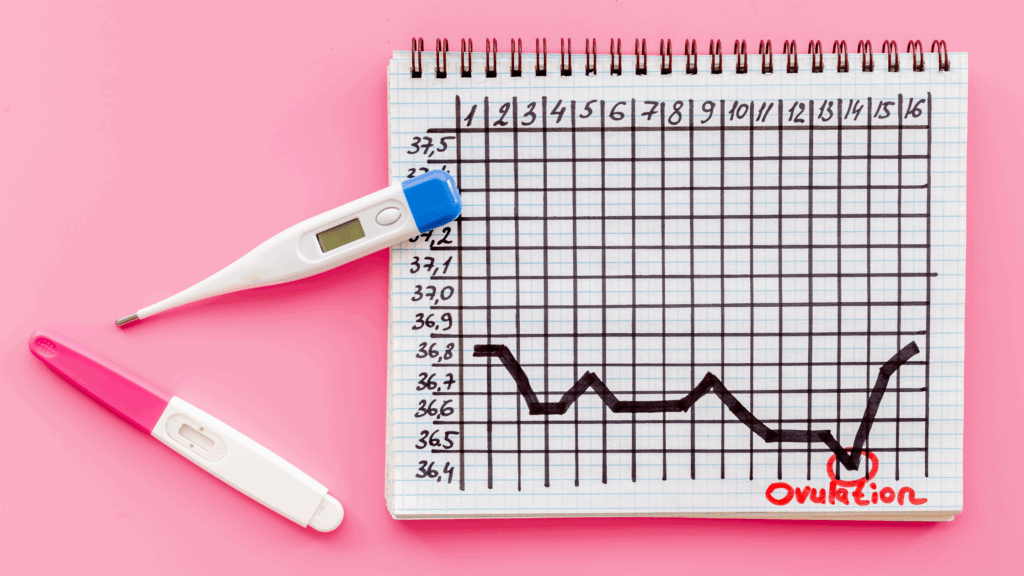
One of the most accurate ways to track ovulation naturally is by using a basal body thermometer. Your basal body temperature is your body’s lowest resting temperature and it changes subtly in response to hormonal shifts.
How It Works:
- Each morning, before getting out of bed, take your temperature with a BBT thermometer (it’s more sensitive than a regular one).
- Record the temperature daily in an app or chart.
- After ovulation, your temperature will rise by 0.2 to 0.5°C (0.4 to 1°F) and stay elevated until your next period.
This thermal shift confirms ovulation after it has occurred. Over a few cycles, you’ll learn to recognize your unique pattern.
How to Track Ovulation Manually
Beyond BBT, your body offers clues to help track ovulation naturally:
Cervical Mucus
- Fertile mucus is clear, slippery, and stretchy (like raw egg whites).
- After ovulation, it becomes thick, cloudy, or disappears.
Cervical Position
- During ovulation: soft, high, and open.
- After ovulation: firm, low, and closed.
Ovulation Pain (Mittelschmerz)
- Some women feel a pinch or cramp on one side of the abdomen when the egg is released.
Tracking Your Cycle After Stopping Birth Control
Coming off hormonal birth control? Your cycles may take time to regulate. You might experience irregular periods, anovulatory cycles, or delayed ovulation. Tracking helps you spot when ovulation returns and how your body is recalibrating.
Be Patient:
It can take 3–6 months (sometimes longer) for normal cycles to resume. Support your hormones with sleep, whole foods, and gentle detox.
What to Do If You Have Irregular Cycles
Irregular cycles may stem from stress, thyroid dysfunction, PCOS, under-eating, or coming off the pill.
Tracking irregular periods helps you spot patterns—such as late ovulation, no ovulation, or short luteal phases—which may signal hormonal imbalances.
Seek medical advice if:
- Your cycles are consistently longer than 35 days
- You skip periods for multiple months
- You have very heavy or painful periods
How Cycle Tracking Supports Hormonal Balance
Once you understand your cycle, you can support your body with targeted lifestyle choices:
- Track hormone fluctuations and match your cycle syncing workouts to your energy.
- Meal plan based on your menstrual phase.
- Adjust your sleep, supplements, and self-care routines as needed.
- Use cycle insights for fertility planning, PMS relief, or postpartum recovery.
Final Thoughts
You don’t need hormonal birth control to understand—or manage—your cycle. With just a thermometer, a charting app, and some body awareness, you can track your ovulation, predict your period, and get in tune with your health like never before.
* This blog is for informational purposes only and is not intended to diagnose, treat, or cure any medical condition. Always consult with a qualified healthcare provider before making changes to your diet, lifestyle, or supplement routine, especially if you are pregnant, nursing, taking medication, or have a health condition.

