
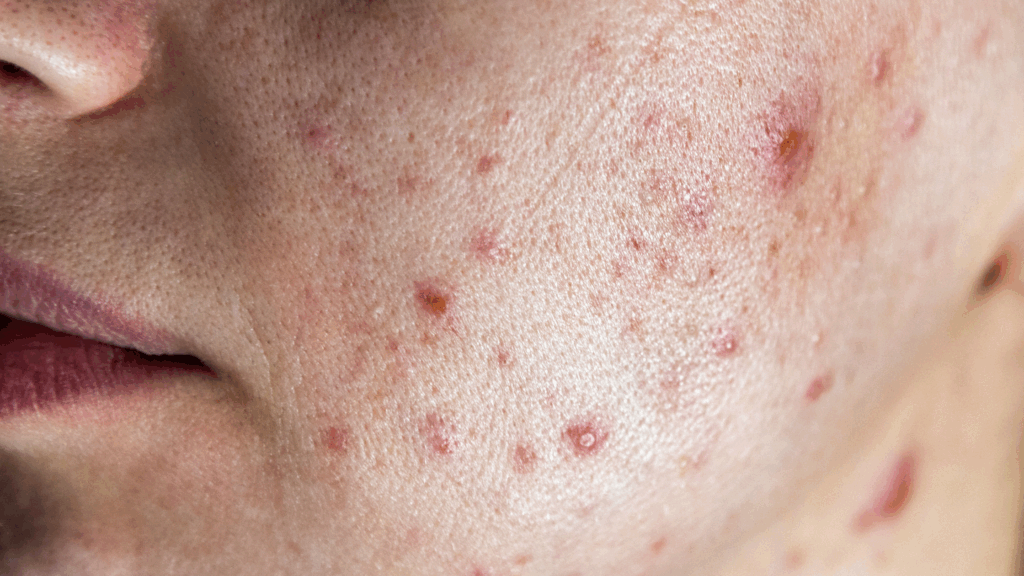
Hormonal acne isn’t just a teenage problem. It can flare in your twenties, thirties, forties—even during perimenopause or after childbirth. These breakouts usually show up along your jawline, chin, or cheeks, and often come with deep, painful cysts that don’t respond well to typical acne treatments.
If you feel like your skin is reflecting something deeper, you’re absolutely right. Hormonal acne starts from the inside. The key to healing it? Understanding your hormones, your gut, your stress response—and how they all interact.
What Causes Hormonal Acne?
At the root of hormonal acne is a disruption in your body’s delicate endocrine system. Androgens, particularly testosterone, play a leading role. These hormones increase oil (sebum) production in the skin. Excess oil clogs pores, feeds acne-causing bacteria, and creates inflammation.
But testosterone isn’t acting alone.
Many women experience estrogen dominance—a state where estrogen levels are too high in relation to progesterone. This imbalance can also trigger acne, especially when progesterone is too low to counteract estrogen’s effects. Progesterone has calming, anti-inflammatory properties. Without enough of it, the skin becomes more reactive, oilier, and prone to breakouts.
Why Timing Matters: Period-Linked Breakouts
Have you noticed that you break out at the same time every month?
- If your acne appears just before your period, it’s often linked to estrogen dominance or low progesterone. Right before menstruation, progesterone drops significantly—and if estrogen is unopposed, this can lead to inflammation and clogged pores.
- If your breakouts show up right after your period, this may be due to a spike in androgens like testosterone. Post-bleeding, estrogen is still rising, but progesterone hasn’t kicked in yet—leaving your skin vulnerable.
This is why tracking your cycle and symptoms can be so powerful. It reveals the hormonal patterns behind your skin issues.
Hormonal Acne vs Regular Acne
Hormonal acne tends to appear in specific zones—especially the lower face. It feels deeper and lasts longer than surface pimples.
Regular acne often stems from external factors: product buildup, bacteria, or environmental pollution. It’s usually more widespread and easier to treat topically.
Gut Health, Sugar, and Hormones: The Inside-Out Connection
Your gut is central to your hormonal health. It helps process and eliminate used-up hormones. If your digestion is sluggish, or your gut lining is inflamed, hormone detox becomes inefficient—and imbalances linger longer than they should.
High sugar intake fuels this dysfunction. Sugar spikes your insulin, which raises testosterone. This is why insulin resistance is a key driver of hormonal acne, especially in conditions like PCOS.
Stress and Hormonal Acne
Cortisol, your stress hormone, affects everything—from ovulation to skin health. Chronic stress can lower progesterone, destabilize estrogen, and increase inflammation. It also makes your skin more sensitive to insulin and androgen spikes.
This is where stress and hormonal acne go hand-in-hand. And why calming your nervous system is just as important as using the right cleanser.
The Problem with Hormone Disruptors
You may be unknowingly exposed to hormone-disrupting chemicals every day. These xenoestrogens—found in plastics, conventional skincare, and processed foods—can mimic estrogen and worsen imbalances.
This worsens estrogen dominance and makes acne harder to treat unless these exposures are reduced.
What You Can Do to Heal Hormonal Acne
1. Balance Blood Sugar
Cut back on refined carbs, sugar, and sweetened drinks. Instead, eat balanced meals with protein, fat, and fiber. This reduces insulin spikes and helps stabilize testosterone.
2. Support Gut Health
A healthy gut helps eliminate excess estrogen and reduce inflammation.
- Eat fermented foods.
- Increase your fiber intake (especially from vegetables).
- Consider probiotics for hormonal acne.
3. Eliminate Trigger Foods
For many, hormonal acne and dairy are strongly linked. Cow’s milk contains hormones that can aggravate acne. Also be mindful of:
- Sugar
- Soy
- Gluten
- Caffeine
These are common foods that cause hormonal acne.
4. Reduce Stress
Calm your nervous system with practices like:
- Breathwork
- Yoga
- Nature walks
- Adaptogenic herbs like ashwagandha or reishi
Stress reduction lowers cortisol and protects your hormonal rhythm.
Powerful Supplements That Help
Supplements can play a supportive role, especially when targeted to your hormonal pattern.
- Zinc calms inflammation and reduces oil production.
- DIM supplement for acne helps clear excess estrogen from the body.
- Omega-3 fatty acids reduce inflammation and support hormone regulation.
- Spearmint tea may lower testosterone levels naturally.
- Magnesium, vitamin D3, and B-complex vitamins are also essential for hormone balance.
Always speak to a professional before starting a supplement routine, especially if you’re on medication.
Smart Skincare for Hormonal Acne
Topical care can’t fix internal imbalances, but it can support your healing.
- Choose non-comedogenic products that won’t clog pores.
- Use salicylic acid or benzoyl peroxide for spot treatments.
- Try clay masks to absorb excess oil.
- Be gentle—no harsh scrubs or over-cleansing.
For hydration, look for hormonal acne-safe moisturizers with calming ingredients like niacinamide or aloe. And don’t forget to cleanse your face after sweating or wearing makeup.
When to Seek Professional Help
If your acne is severe, painful, or scarring, it may be time to consult a hormonal acne dermatologist. You can explore:
- Hormonal acne prescription medications
- Birth control for acne
- Spironolactone
- Accutane
- Laser treatment for acne scars
These options can be effective, but should always be paired with internal lifestyle shifts for lasting results.
Final Thoughts: Hormonal Acne Is a Signal, Not a Sentence
Hormonal acne is frustrating, yes—but it’s also a valuable sign. Your skin is showing you that something inside needs care and rebalancing. Whether it’s estrogen dominance, low progesterone, excess testosterone, or gut dysfunction—your body is asking you to listen.
By healing from the inside out, you can restore balance, calm inflammation, and let your skin reflect your overall vitality.
* This blog is for informational purposes only and is not intended to diagnose, treat, or cure any medical condition. Always consult with a qualified healthcare provider before making changes to your diet, lifestyle, or supplement routine, especially if you are pregnant, nursing, taking medication, or have a health condition.

